Bilingual Call Center Agents Who Protect Trust
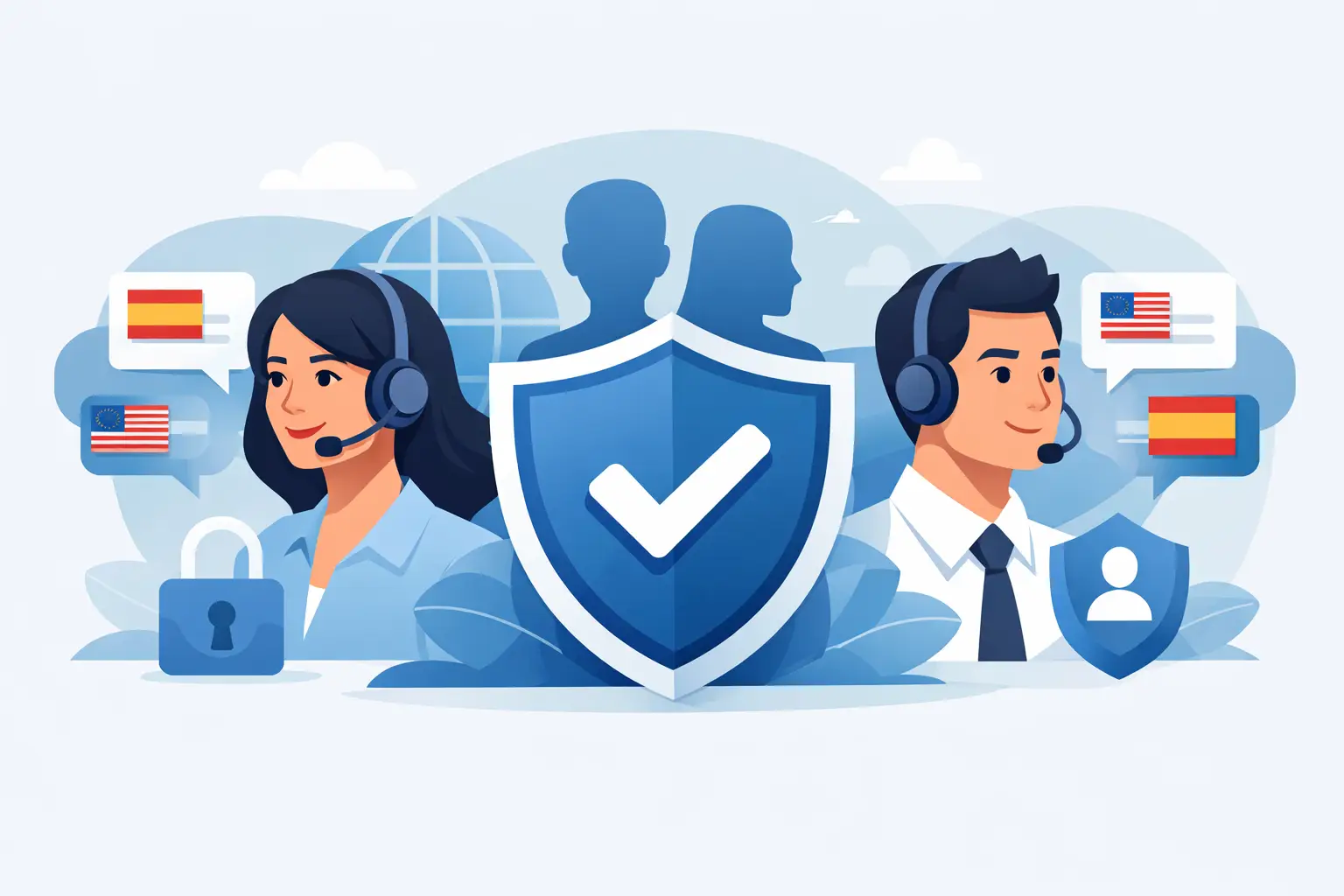
A customer who cannot comfortably explain a billing question, a medical concern, or a service issue is not simply harder to serve. That customer is more likely to disengage, repeat the call, miss a next step, or leave with less confidence in the organization. Bilingual call center agents address that gap by making English- and Spanish-speaking customers feel heard, understood, and treated with dignity from the first interaction.
For US organizations serving diverse communities, language support is no longer a narrow coverage feature. It is a practical requirement for protecting revenue, improving resolution, and representing the brand with courtesy. The right program does more than translate words. It gives customers a clear path to action while giving operations leaders dependable capacity, consistent quality, and meaningful control over cost.
Why Bilingual Call Center Agents Matter
Many businesses measure customer service through speed, volume, and cost per contact. Those measures matter, but they do not tell the entire story. A short call that leaves a customer confused can create a second call, an escalation, a missed payment, a canceled reservation, or a complaint. In financial services, healthcare, utilities, retail, travel, and technical support, clarity has direct operational value.
Bilingual support helps organizations reduce the friction that arises when a customer must switch channels, wait for a language specialist, or rely on a family member to interpret a sensitive conversation. It also gives agents the ability to recognize cultural context, adjust their pacing, and explain policies in terms the caller can follow. That distinction is especially meaningful in account servicing, collections-adjacent communications, patient scheduling, and problem resolution, where customers may already feel pressure or uncertainty.
Respect is central to this work. A bilingual agent should never make a customer feel like an exception to the process. The goal is to provide the same consideration, accuracy, and professional attention regardless of the language a customer uses.
Language Fluency Is Only the Starting Point
A bilingual workforce is valuable only when language ability is paired with strong contact-center judgment. An agent may speak both English and Spanish fluently yet still need training on client policies, data handling, de-escalation, system navigation, and the specific vocabulary of the industry. A healthcare appointment conversation, for example, requires a different level of care than a retail return or a software troubleshooting call.
Effective bilingual agents are able to listen for intent, not just individual words. They can clarify a vague request without sounding impatient, explain an unfamiliar process in plain language, and document the interaction accurately for the next representative. They also know when not to improvise. In regulated or sensitive environments, approved language, verification steps, and escalation procedures protect both the customer and the organization.
This is why certification, quality monitoring, and focused coaching should be part of the staffing model. Organizations should look for agents who can handle the work, not merely hold a bilingual designation. Courtesy and confidence are learned operational behaviors, reinforced through training and supervision.
Building a Bilingual Call Center Agent Program
The right staffing approach depends on call types, hours of coverage, demand variability, and the complexity of each interaction. Some organizations need a dedicated Spanish-speaking queue with agents assigned by language. Others benefit from a blended team, where certified agents can move between English and Spanish contacts as volume requires. A blended model can improve coverage and reduce idle time, though it requires careful forecasting and clear routing rules.
Start by examining actual demand. Review the percentage of Spanish-language contacts, peak call windows, abandonment rates, transfer patterns, repeat-contact reasons, and the channels customers use most. Voice may be the priority, but bilingual support can also be needed for chat, email, SMS outreach, appointment reminders, and follow-up campaigns.
Next, define what agents must be able to do. A basic inbound support role may require order status, password resets, and account updates. A more involved role may include payment arrangements, patient intake, lead qualification, reservations, retention, or technical diagnostics. The greater the complexity, the more important it becomes to align agent experience and training with the assignment.
A flexible outsourced workforce can be particularly useful when a business is launching a campaign, expanding into new markets, managing seasonal demand, or recovering service levels after attrition. Certified work-from-home agents, supported by nearshore and onshore operations, can provide faster access to bilingual capacity than building a full internal team. Ring & Respect applies that flexibility without treating customers as call volume, because every interaction carries the client’s reputation.
Measure Quality Alongside Efficiency
Average handle time has a place in contact-center reporting, but it can be misleading when it becomes the dominant goal. Agents should not rush a customer through an explanation of a financial obligation, insurance requirement, travel disruption, or care instruction just to shorten the call. The better question is whether the customer received a correct, understandable, and respectful resolution.
A balanced bilingual scorecard can include service level, answer rate, first-contact resolution, quality assurance scores, transfer rate, repeat contacts, conversion or payment outcomes where appropriate, and customer satisfaction. Review these results by language as well as by queue. If Spanish-speaking callers experience longer waits, more transfers, or lower resolution rates than English-speaking callers, the operation has identified a service gap that deserves attention.
Quality evaluations should assess more than script adherence. They should consider whether the agent confirmed understanding, used clear language, protected private information, followed required disclosures, and maintained a courteous tone. These details show customers that the organization values their time and esteem.
Where Bilingual Operations Commonly Fall Short
The most common mistake is treating bilingual support as an afterthought. A business may advertise Spanish service but route callers through a long menu, have too few qualified agents during peak periods, or transfer customers repeatedly before the real issue is addressed. That experience damages trust precisely when the business intended to build it.
Another problem is relying on literal translation for customer-facing scripts and knowledge resources. Direct translations can sound unnatural, miss regional phrasing, or create confusion around technical and financial terms. Materials should be reviewed by qualified Spanish-speaking professionals who understand both the customer context and the required compliance language.
Underestimating emotional complexity can also hurt results. Customers calling about overdue balances, denied claims, delayed travel, medical access, or faulty products may be frustrated before an agent answers. A respectful bilingual agent does not promise what the organization cannot deliver. Instead, the agent listens carefully, explains the available options honestly, and helps the customer take the next appropriate step.
Finally, businesses should avoid assuming all Spanish-speaking customers have identical preferences or experiences. Spanish is spoken across many countries and communities, with different vocabulary and communication styles. Clear, neutral language and active listening are usually more reliable than stereotypes or overly casual phrasing.
A Standard Customers Can Hear
Bilingual contact-center capacity works best when it is designed as part of the customer experience, not added as a last-minute staffing fix. The operational goals are straightforward: answer promptly, communicate accurately, resolve the issue when possible, and document the outcome correctly. The human standard is just as clear: offer every customer consideration and dignity.
When customers can speak in the language that feels natural to them, they are better positioned to understand their options and move forward with confidence. That is not only better service. It is a stronger foundation for the relationships that keep a business trusted, responsive, and ready to grow.