
Appointment Reminder Call Services That Protect Trust
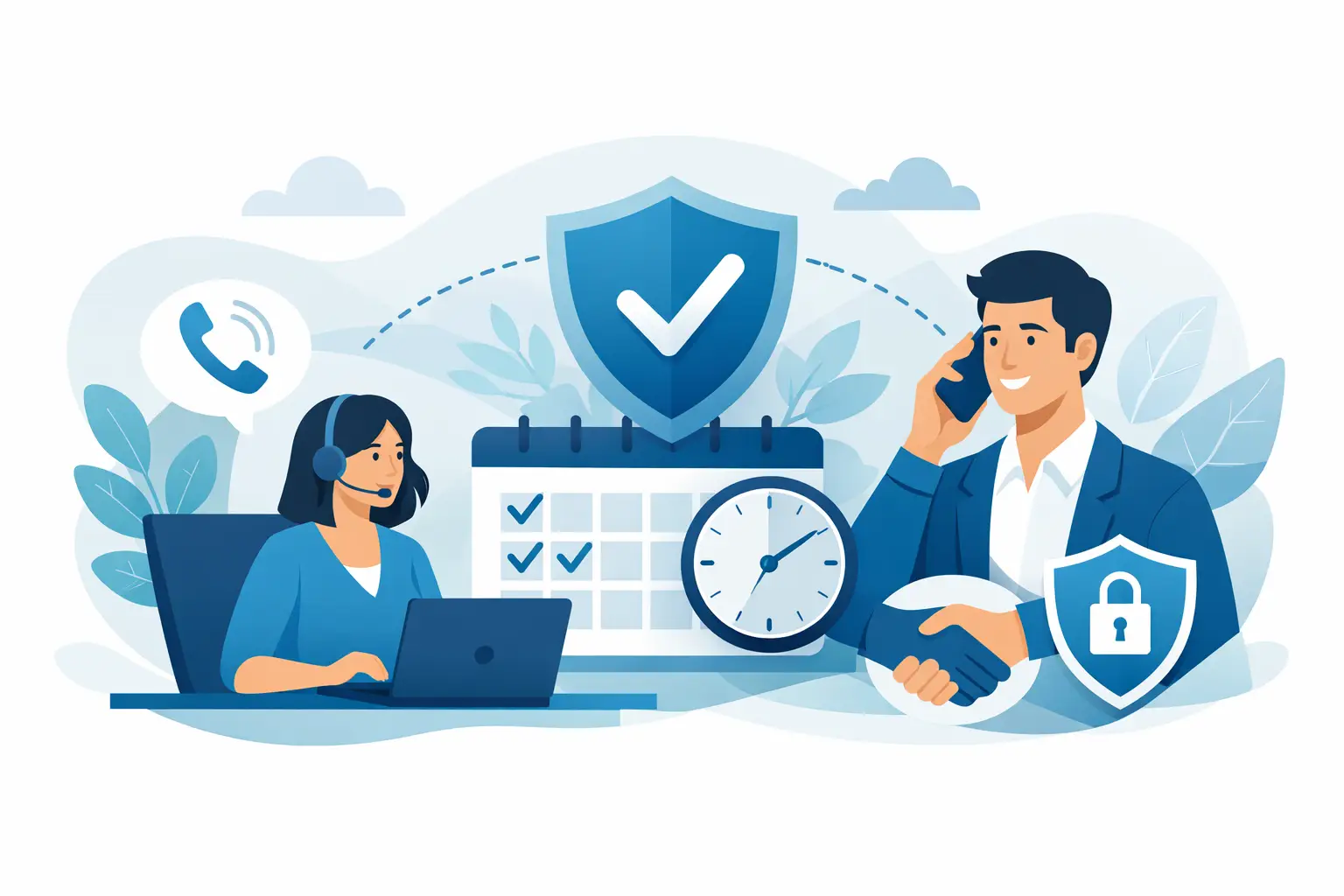
A missed appointment is rarely just an empty slot on a calendar. It can delay care, interrupt a service plan, waste staff time, and create avoidable revenue loss. Appointment reminder call services give organizations a practical way to reduce those gaps while treating every patient, customer, guest, or client with the courtesy they deserve.
For healthcare administrators, service operators, and customer-experience leaders, the objective is not simply to place more calls. It is to create timely, considerate communication that helps people act. The best reminder programs respect personal preferences, make rescheduling easy, protect sensitive information, and give internal teams a reliable view of what will happen next.
Why appointment reminders still require a human touch
Text messages and email reminders are useful, especially when a person has clearly chosen those channels. Yet digital messages are easy to overlook, filtered into crowded inboxes, or seen too late to change an outcome. A courteous call can reach someone who needs clarification, has a transportation concern, wants to adjust a time, or simply has not noticed an earlier message.
That human conversation is especially valuable when an appointment carries real consequence. A patient may need to prepare for a procedure. A financial-services customer may need help completing a scheduled account review. A hospitality guest may need to confirm a reservation or update an arrival time. In each case, a trained agent can address the immediate question and document the response rather than leaving the organization to guess whether a message was received.
The trade-off is that live calling requires disciplined execution. Poor timing, generic scripts, repeated attempts, or an agent who cannot answer basic questions can make a reminder feel intrusive instead of helpful. This is why the operating model matters as much as the call volume.
What effective appointment reminder call services do
A well-managed reminder program starts with clear business rules. Which appointments receive calls? How far in advance should contact begin? What happens if the person confirms, declines, requests a change, or cannot be reached? Teams need these decisions defined before agents begin outreach.
The service should then connect the right information to the right action. Agents may confirm attendance, offer approved rescheduling paths, capture cancellation reasons, provide preparation details, or escalate questions to a qualified internal team member. Each outcome should be recorded accurately so schedulers, front-office staff, and operations leaders can work from current information.
For many organizations, bilingual English-Spanish capability is not an add-on. It is central to respectful service. When people can communicate in the language they understand best, they are more likely to receive instructions correctly, ask needed questions, and follow through. It also signals consideration for the communities a business serves.
The call should feel helpful, not transactional
The opening of a reminder call sets the tone. Agents should identify the organization appropriately, verify the person according to the client’s approved process, and communicate the purpose plainly. They should avoid pressuring people into commitments they cannot keep.
A strong script provides consistency without making the agent sound mechanical. It gives the agent approved language for confirmation, rescheduling, voicemail, objections, and escalation, while leaving room for a natural conversation. Respect is not a phrase inserted at the end of a script. It is evident in pacing, listening, accuracy, and the willingness to help resolve a problem.
The service must protect information
Reminder outreach often involves personal, medical, financial, or travel-related details. Organizations should establish what agents may disclose in a live conversation, voicemail, text follow-up, or message to a third party. The appropriate approach depends on the industry, the nature of the appointment, applicable privacy obligations, and the organization’s own policies.
Healthcare teams, for example, need workflows that support HIPAA-aligned communications and limit unnecessary disclosures. Financial-services organizations must consider their privacy, consent, and communication requirements. Any automated calling or texting component should be reviewed against applicable consumer-contact rules and consent practices. Compliance should be built into campaign design, training, quality assurance, and reporting, not treated as a cleanup task after launch.
Designing a reminder cadence people will accept
There is no universal calling schedule. A same-day dental appointment, a specialty consultation booked months ago, a home-service window, and a hotel reservation each create different customer needs. The right cadence depends on appointment value, lead time, typical no-show behavior, and the ease of filling a canceled slot.
Many programs begin with a reminder several days ahead, followed by a closer-in confirmation attempt when appropriate. The aim is to provide enough notice for people to make a change without creating unnecessary contact. Calling too early can produce forgotten confirmations. Calling only at the last minute leaves too little time to recover the schedule.
Contact preferences should guide the process whenever they are available. Some people prefer a call, while others respond better to text or email. A blended approach often performs well: an automated message handles routine outreach, while certified agents focus on unconfirmed appointments, higher-value bookings, vulnerable populations, or people who need assistance. This directs live-agent capacity where it can have the greatest effect.
The operational measures that matter
A reminder service should be evaluated by more than completed dials. High activity without useful outcomes can add cost and frustrate the people being contacted. Leaders should look at confirmation rates, reschedule rates, cancellation notice, no-show reduction, contact rates, and the percentage of appointments saved or backfilled after a cancellation.
It is also useful to measure call quality. Are agents verifying information correctly? Are they using approved language? Are disposition codes accurate? Are escalations reaching the right team quickly? Quality monitoring and calibrated coaching help ensure that performance standards are consistent across agents and shifts.
Cancellation reasons can be particularly valuable. When a program consistently captures why people do not attend, the organization can identify barriers that scheduling data alone will not reveal. Transportation problems, unclear instructions, long wait times, pricing concerns, work conflicts, and language barriers may point to operational changes that reduce missed appointments over time.
When outsourcing makes sense
Internal staff often own appointment outreach by default, even when their primary role is serving people who are already on-site or actively requesting help. During seasonal spikes, staffing shortages, extended hours, or rapid growth, those competing demands can lead to inconsistent follow-up.
An outsourced partner can provide flexible capacity without requiring the organization to build, train, schedule, and supervise a separate calling team. This is particularly useful for multi-location operations, businesses that need evening or weekend coverage, and organizations serving both English- and Spanish-speaking audiences. Nearshore and onshore staffing models can also help leaders balance cost control with service requirements.
Still, outsourcing is not a substitute for ownership. The client must provide current appointment data, clear escalation rules, approved scripts, systems access appropriate to the work, and a decision-maker who can resolve recurring issues. The provider should bring trained agents, management discipline, reporting, and a respectful calling culture. Ring & Respect approaches that responsibility with the understanding that every call represents the client’s reputation.
A practical way to launch the program
Start with a focused pilot rather than trying to contact every scheduled person on day one. Select an appointment type or location with a measurable no-show problem, define the audience and cadence, and establish a baseline for attendance and cancellations. Train agents on the organization’s service expectations, terminology, privacy practices, and escalation paths before the first campaign begins.
During the pilot, review outcomes frequently. If contact rates are low, examine calling windows and available phone data. If people confirm but still do not attend, reconsider the timing of the second reminder or the clarity of preparation instructions. If cancellation rates rise, determine whether the program is simply surfacing cancellations earlier, which can be a positive result when open slots can be filled.
The most valuable reminder call is not the one that checks a box in a dialing report. It is the one that gives a person a clear, dignified path to keep an important commitment, change it responsibly, or get the help they need.