
Is Outsourcing Secure? A Practical Answer for Leaders
A customer calls about a payment, a patient appointment, a reservation, or a technical issue. The person answering may be part of an outsourced team, but the customer experiences that conversation as your brand. That is why the question, is outsourcing secure, is bigger than where agents work or how much a staffing model costs. It is about whether your customer data, operating standards, and reputation remain protected in every interaction.
The practical answer is yes, outsourcing can be secure. But it is not automatically secure because a provider has an attractive price or a large agent pool. Security depends on the partner’s controls, the design of the program, the discipline of the people handling sensitive information, and the level of oversight your organization maintains.
For leaders responsible for customer experience, account servicing, collections, healthcare communications, and sales outreach, the right standard is not blind trust. It is verified trust, supported by clear processes and respectful execution.
Is Outsourcing Secure When Agents Work Remotely?
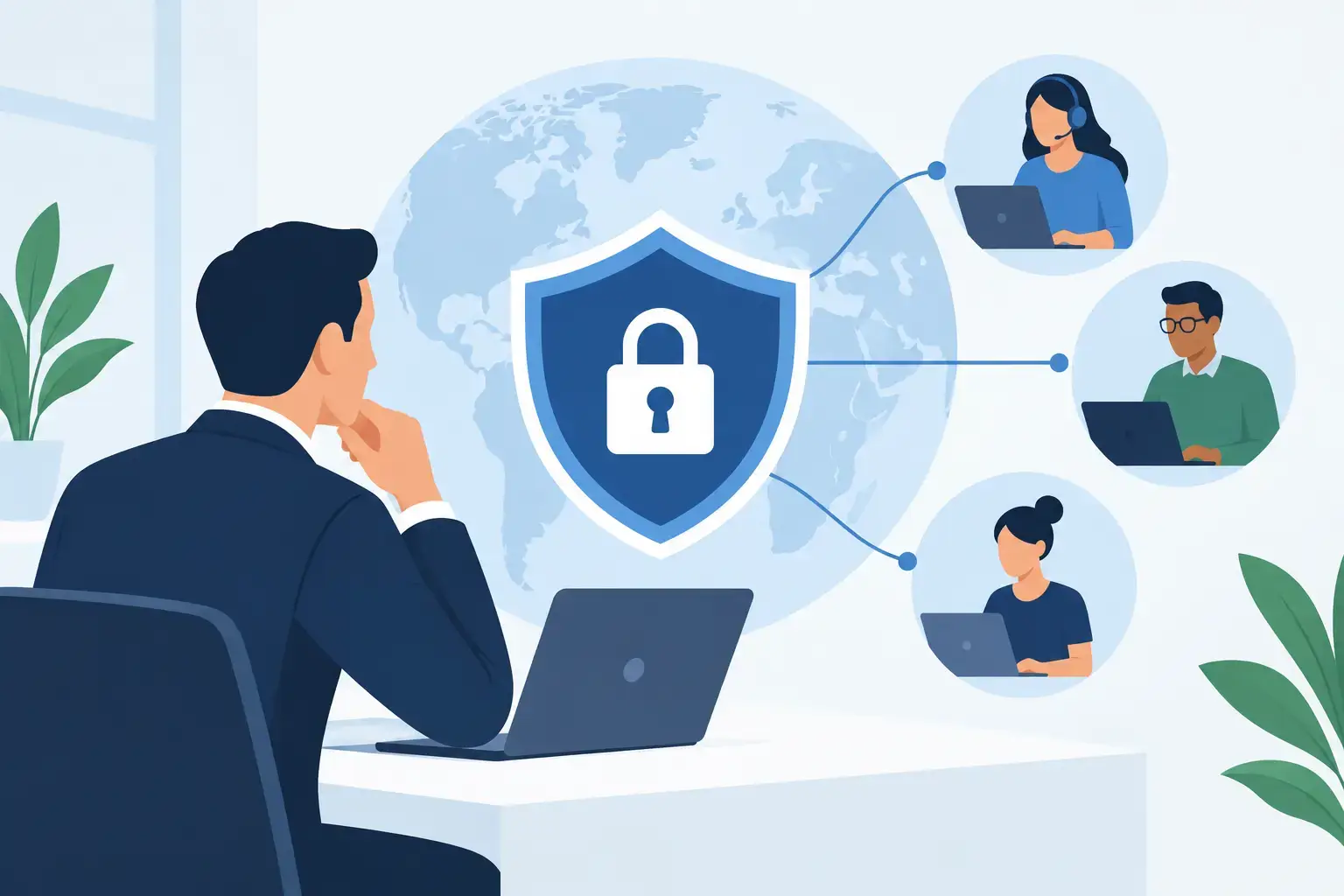
A work-from-home contact center can protect sensitive information effectively, provided the operating model is built for accountability. Remote work changes the security environment. It does not remove the need for security, and it should not lower the standard.
The strongest outsourced programs treat every agent workstation as a controlled extension of the client operation. That means access is limited to the systems, records, and functions required for the agent’s role. It also means leaders can see who accessed information, when they accessed it, and what actions were taken.
For industries such as financial services, healthcare, retail, travel, and technical support, remote-agent security should be paired with thoughtful interaction design. An agent should never be placed in a position where they must improvise around payment data, medical details, or account credentials. Clear workflows protect the organization and give customers the courtesy of a confident, well-managed conversation.
Security is also human. A respectful culture matters because people who understand the dignity of the customer are more likely to handle information with care. Courtesy does not replace technology or compliance requirements, but it strengthens the daily judgment that written policies alone cannot create.
What Makes an Outsourcing Partner Secure?
A provider’s security posture should be evaluated in layers. The goal is to confirm that protections exist before, during, and after each customer interaction, rather than relying on a single promise or a checkbox in a contract.
Controlled access protects sensitive information
Agents should have role-based access, unique user credentials, and only the permissions needed to complete assigned work. Shared logins, broad administrative access, and unnecessary system visibility create avoidable exposure.
Ask how the provider handles password standards, multi-factor authentication, session timeouts, user provisioning, and immediate removal of access when an agent changes roles or leaves the program. These details may sound operational, but they are often where security succeeds or fails.
For payment-related work, the safest process minimizes the information an agent can see or retain. For healthcare communications, access should align with the specific patient-support task at hand. The principle is simple: collect, display, and store only what the process truly requires.
Secure technology needs secure routines
Encryption, protected connections, endpoint controls, and monitored systems are essential. Yet technology is only as dependable as the routines surrounding it. A secure environment requires regular patching, documented incident-response procedures, access reviews, and tested continuity plans.
Business leaders should understand what happens if a device is lost, an unusual login is detected, or a customer reports a possible account compromise. A capable outsourcing partner can explain the escalation path clearly: who is notified, what is contained, how evidence is preserved, and when the client is informed.
Do not settle for vague statements about being secure. Ask for a plain-language explanation of the safeguards used for your program and how those safeguards are monitored in practice.
Training is a front-line control
Even well-designed systems can be undermined by an unprepared agent. Training should cover privacy expectations, social engineering, identity verification, phishing awareness, acceptable data handling, escalation procedures, and the specific regulations that apply to the client program.
The training must also be relevant to the real conversations agents will have. A representative supporting overdue accounts needs to know how to verify the consumer without exposing account information. A patient-services agent needs to know when a question requires a compliant handoff. A technical-support agent needs to recognize when a caller is attempting to obtain privileged access.
Certification, coaching, quality assurance, and refresher training are not administrative extras. They are part of the security model. At Ring & Respect, respectful treatment of consumers and disciplined process execution belong together because both protect the relationship a client has worked to earn.
Quality monitoring should measure more than speed
A contact center can meet average handle-time targets while still creating risk. Monitoring should evaluate whether agents completed verification correctly, followed disclosure requirements, used approved systems, documented interactions accurately, and escalated exceptions properly.
This is especially significant in account servicing, collections, healthcare, and financial communications, where a rushed or poorly documented call can create compliance exposure as well as customer frustration. Quality reviews should identify patterns early, then feed those findings back into coaching and process improvements.
The Trade-Offs Leaders Should Consider
Outsourcing is not a transfer of responsibility. Your organization remains accountable to customers, regulators, and stakeholders. The partner operates a portion of the work, but leadership must establish the guardrails, approve the workflows, and review performance.
There is also a genuine trade-off between speed and due diligence. Fast deployment can be valuable when call volumes rise, a new campaign launches, or internal capacity is strained. But rapid staffing should not mean hurried security reviews. A qualified provider should be able to move quickly while still documenting workflows, training agents, confirming access rules, and setting reporting expectations.
Nearshore, onshore, and blended teams can each be secure. Geography alone does not determine risk. The more meaningful questions are whether the provider can enforce consistent standards across locations, whether supervisors have visibility into operations, and whether the workforce is trained for the sensitivity of the work.
Cost should be assessed in the same balanced way. Lower labor costs can improve flexibility and make service coverage more sustainable. However, the lowest bid may leave little room for training, quality assurance, security administration, or experienced management. The better value is a model that controls cost without treating customer care or data protection as expendable.
Questions to Ask Before You Outsource
Before selecting a provider, ask for specific answers rather than general assurances. The following questions can reveal whether security is embedded in the operation:
- How are agent identities, system access, and permissions managed throughout employment?
- What controls protect customer information on remote devices and home networks?
- How are calls, records, and sensitive information handled, retained, and securely disposed of?
- What training and quality checks apply to privacy, verification, compliance, and escalation?
- What is the incident-response process, and how quickly will our organization be notified?
- How will performance, exceptions, and security-related findings be reported to our team?
The answers should be documented, understandable, and appropriate for your industry. A strong provider welcomes these questions because transparency is part of earning confidence.
Build Security Into the Relationship, Not Just the Contract
The most secure outsourcing relationships are active partnerships. They begin with a detailed implementation plan and continue through regular operational reviews. Client leaders and provider managers should examine quality results, access changes, customer feedback, complaint trends, and emerging risks together.
Security also improves when expectations are shared with agents in practical terms. They should understand not only which rules apply, but why the rules honor the customer. Protecting a card number, account balance, health detail, or travel plan is an act of consideration. It tells the customer that their information and time are worthy of care.
Outsourcing can give an organization the capacity to serve more people, extend hours, support English- and Spanish-speaking customers, and respond quickly to changing demand. The right partner makes that added capacity feel consistent with your own values. Choose one that can demonstrate disciplined controls, train people to use sound judgment, and represent every customer with the respect your brand deserves.